
Signs Your AC Is About to Fail
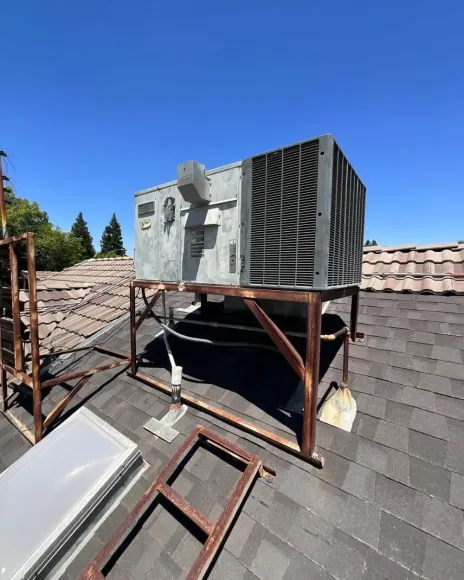
None of these signs mean you automatically need a full replacement. Most are a repair — but you need a real diagnosis to know which one you’re looking at, not a guess over the phone. Every visit gets a pre-repair video walkthrough before any work starts.
Call Now: (866) 945-6473 Schedule a Diagnostic →A Fresno summer doesn’t give a failing AC much room to fail quietly. Most of the systems we get called out for didn’t die without warning — they gave off two or three signs first, usually a week or two before the day it actually quits at 4pm in 105° heat. Here’s what those signs actually look like, from what our techs see on real service calls, not a generic checklist.
1. Warm air where cold air should be
If air is still moving out of the vents but it’s not actually cold, that’s usually one of three things: a refrigerant leak, a failing compressor, or a dirty condenser coil that can’t shed heat anymore. Refrigerant doesn’t get “used up” the way oil does in a car — if your system is low, it’s leaking somewhere, and running it low for weeks at a time is what burns out a compressor early, which is usually when a repair stops being the cheaper option and replacement starts making more sense.
2. Short cycling — on for a few minutes, off, on again
A healthy AC runs in longer, steady cycles. If yours is kicking on and off every few minutes, especially in the hottest part of the day, that’s a system struggling to satisfy the thermostat — often a sign of a failing capacitor, a refrigerant issue, or (in older Central Valley homes) a unit that was never properly sized for the house during its original installation. Short cycling also burns more electricity for less cooling, which is usually the first thing people notice on their bill before they notice the AC itself.
3. A rising electric bill with no other explanation
Capacitors and contactors degrade faster in extreme heat — a system that’s 95°F+ ambient for weeks at a time ages 2-3x faster than the same equipment in a mild climate. A part working harder than it should pulls more power before it ever fully fails. Routine tune-ups catch most of this before it shows up on a bill — if yours jumped and nothing else changed, that’s worth a look before it turns into a full no-cool emergency.
4. Weak airflow from the vents
This one’s often blamed on the outdoor unit, but it’s just as often the ductwork — a clogged filter, a failing blower motor, or in older homes, ducts that were never sized right for the system running through them. If this is happening at the same time you’re noticing dust or an odd smell from the vents, it’s worth having both the AC and the duct system looked at together rather than just the unit outside. If a roof replacement is anywhere in your future, that’s also the one window to fix ductwork properly without cutting into ceilings — see our Roof + Duct Combo page for why.
5. Water pooling near the indoor unit
That’s the condensate line, not the refrigerant system — but it still isn’t something to leave alone. A clogged condensate line can back up into the drain pan and, over time, into the surrounding drywall or subfloor. It’s usually a simple fix on its own, but it’s also one of the first things we check on a video-documented inspection, since it’s easy to miss until there’s real water damage behind it.
6. A burning or musty smell when it kicks on
A brief dusty smell on the season’s first run is normal. A smell that lingers, or smells electrical rather than dusty, isn’t — that’s worth turning the system off and having it looked at before running it again, not after.
Want the fuller picture on how we diagnose before we quote? See our AC Repair in Fresno page.